Shaman Farm and Falls, Panauti
The living land.
Part of caring for a place is paying attention to what shares it with you. Three ropani of land are taking shape here around the falls — a working farm growing on it, the water always somewhere within earshot — and like any hillside above Panauti, it turns with the seasons: green and full through the warm months, clearer and quieter as the year draws toward winter.
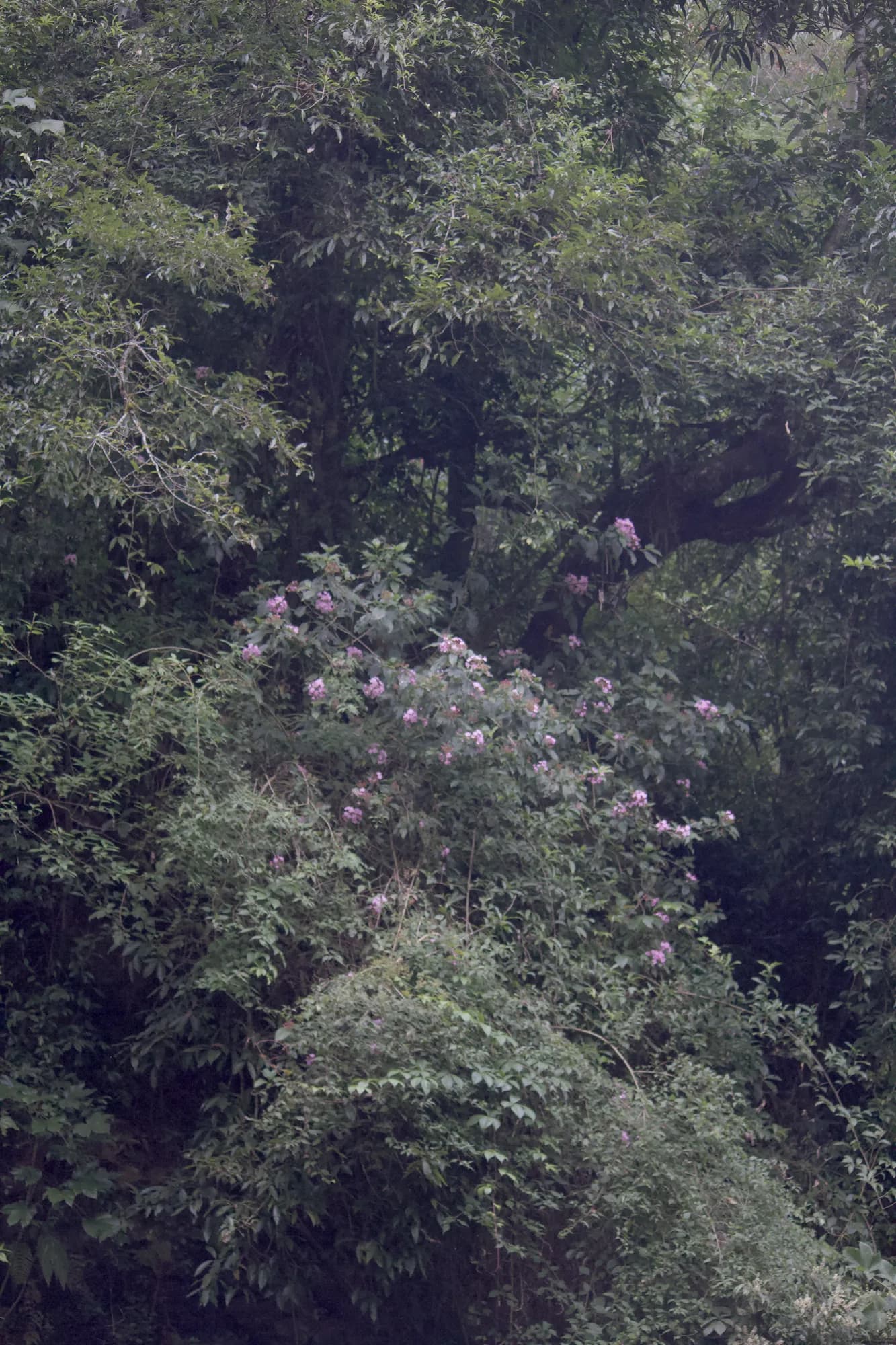
We're caretakers of this place, not its owners — and that goes for the plants and the creatures here as much as it does for the falls. As we spend more time on the land, we'll keep adding to what we've actually seen here, rather than guessing at what should be around a hillside waterfall. This part of the site will grow as we do.
Getting here
Shaman Farm and Falls sits in Panauti, beside Panchakanya Waterfall, on the Roshi Khola.
- Distance
- 40–45 km
- Drive time
- 1 hr 15 min–1 hr 30 min
- Bus from Ratna Park
- Every 15 min
- Fullest season
- June–September
Where is it?
Panauti, beside Panchakanya Waterfall, on the Roshi Khola.
How far is it from Kathmandu?
Roughly 40–45 km from Kathmandu, about 1 hour 15 to 1 hour 30 minutes by private vehicle.
How do I get there?
Take the Arniko Highway through Banepa to Panauti. From Panauti Bus Park, follow the road toward Roshi Municipality — signage points the way from there. The last stretch beyond Panauti is unpaved, so a motorbike or 4×4 is recommended for that final leg.
- 01Take the Arniko Highway through Banepa to Panauti.
- 02From Panauti Bus Park, follow the road toward Roshi Municipality.
- 03Signage points the way from there.
- 04The last stretch beyond Panauti is unpaved.
- 05A motorbike or 4×4 is recommended for that final leg.
Can I come by public transport?
Direct buses run from Ratna Park to Panauti roughly every 15 minutes (around NPR 80, 1.5–2 hours). Beyond Panauti, the last leg to the land is a walk or a private/hired ride — no bus runs that far.
What's worth knowing before you come?
Panauti is one of the valley's great Newari heritage towns — the Indreshwar Mahadev Temple, the Tri-beni Ghat river confluence, and preserved pagoda architecture already bring visitors here, independent of the falls.
When is the best time to visit?
Panchakanya Jharna runs fullest through the monsoon months (June–September); October–November brings clearer skies and fewer crowds. The quieter winter months are their own kind of good — cold clear air, low light, the falls near enough to yourself. If you're coming for the sound bath rather than the crowd, winter is the season to go deep.